

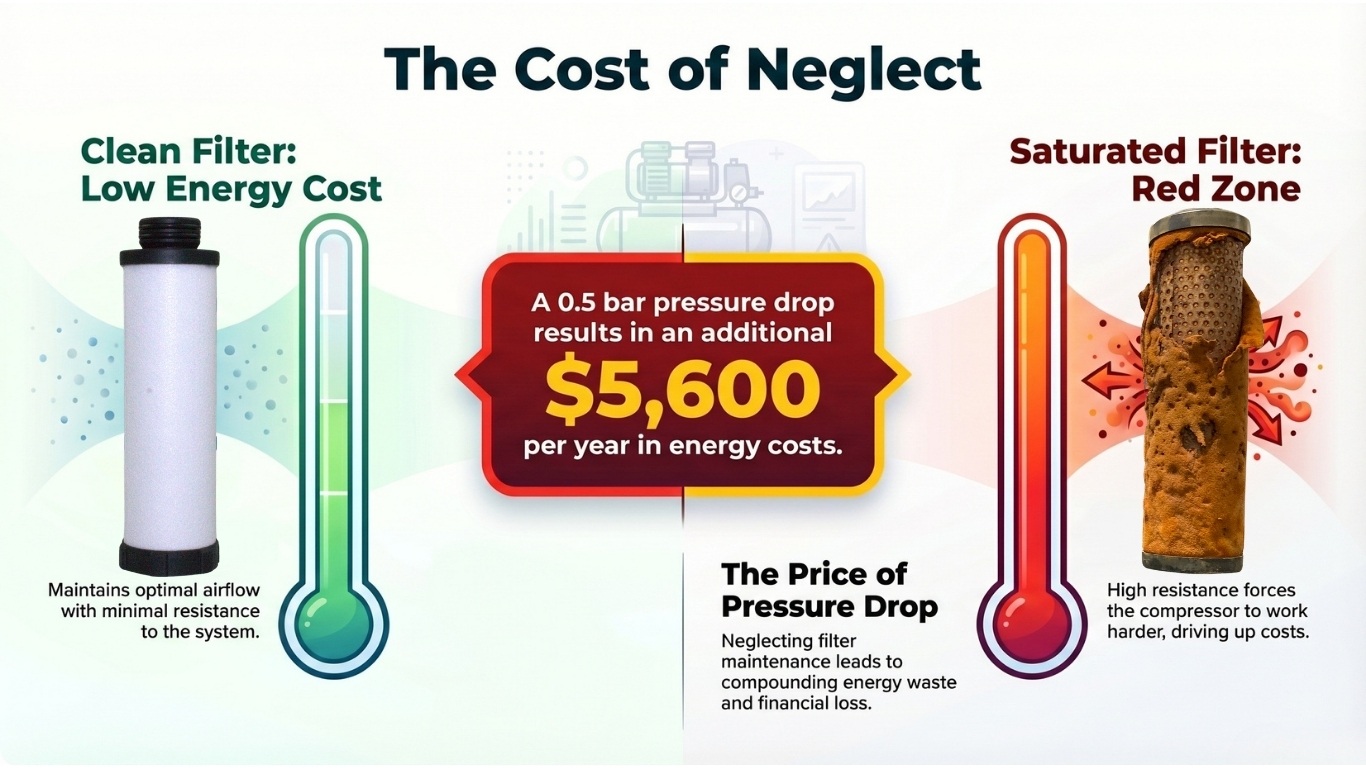
For most plant managers, a 0.5 bar (7 psi) drop across a compressed air filter feels like a minor technicality, a “yellow zone” on a gauge. However, in the world of industrial filtration, that pressure drop isn’t just a number. It’s a direct tax on your bottom line.
At National Filters Pty Ltd, we specialise in helping Australian companies move beyond reactive maintenance. Understanding the physics of specific power consumption is the first step toward significant annual cost savings. What is the cost of pressure drop?
The Mathematics of Pressure Drop (∆p)
The industry standard rule of thumb is simple but sobering: Every 14 kPa (2 psi) of pressure drop represents approximately a 1% increase in compressor energy costs.
If your system operates at 700 kPa (100 psi) and your filter elements are saturated, your compressor must “work uphill” to maintain line pressure. Essentially, you are burning electricity to generate heat and friction rather than usable CFM.
The Formula for Annual Cost:
To calculate the cost of a clogged filter, use this industry-standard calculation:
Cost = [Motor kW] x [Annual Hours] x [Electricity Rate] x [Pressure Drop % Impact]
For a standard 75kW compressor running 6,000 hours a year at $0.25/kWh, a neglected filter causing a 10 psi drop adds roughly $5,600 per year to your energy bill. In contrast, a high-efficiency National Filters replacement element often pays for itself in less than three months.
Beyond Energy: The Technical Domino Effect
Focusing solely on energy misses the broader technical implications of high ∆p. When filter elements exceed their dirt-holding capacity, several critical failures occur:
- Reduced Tool Torque and Actuator Speed: Pneumatic tools and robotic actuators require specific dynamic pressure. When pressure drops, cycle times increase, silently killing your throughput.
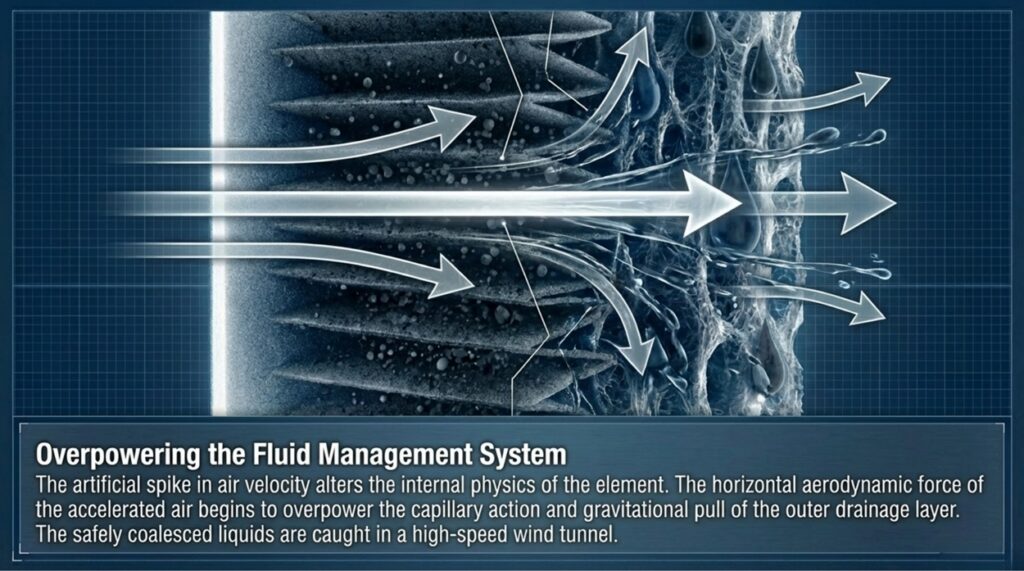
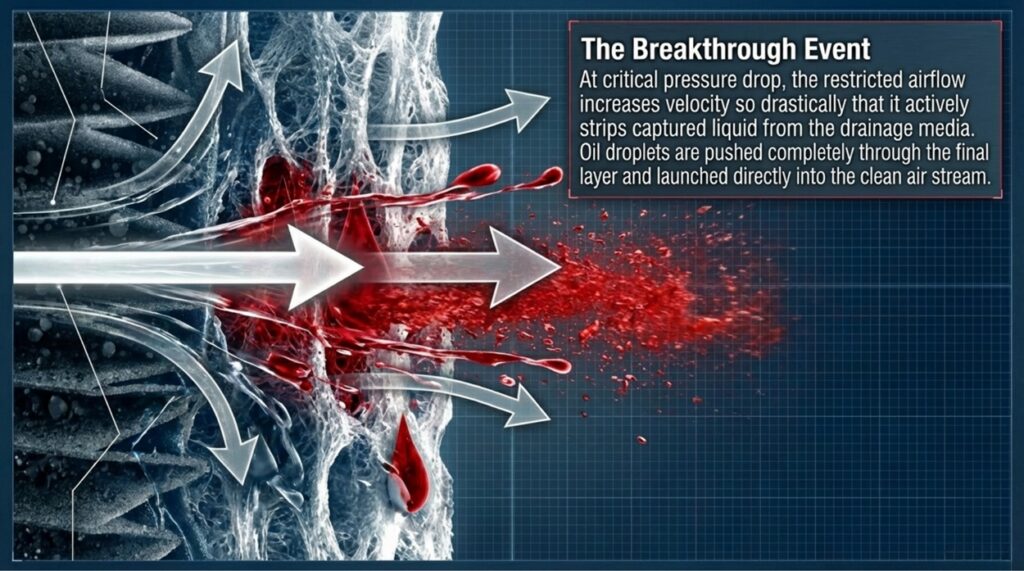
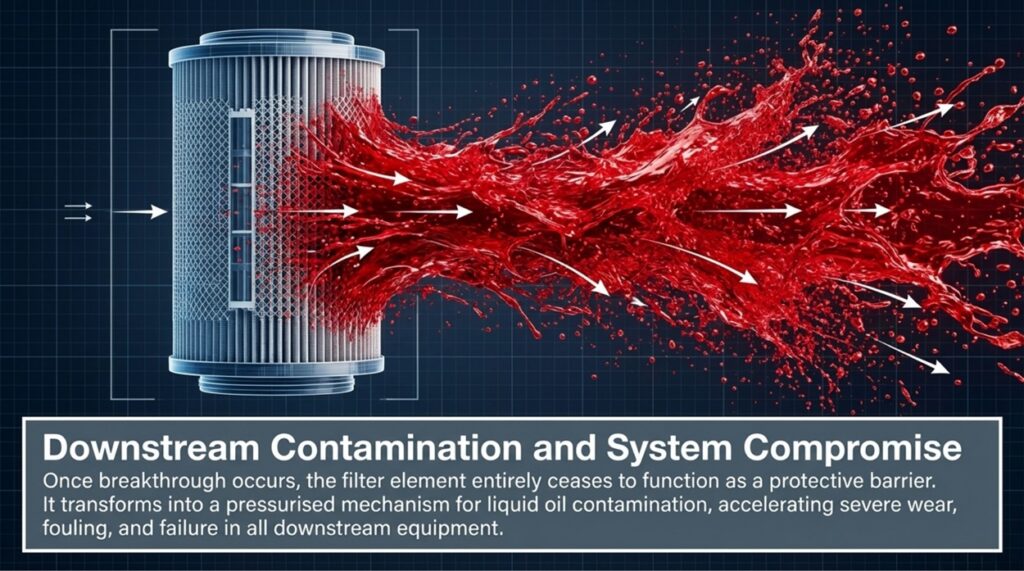
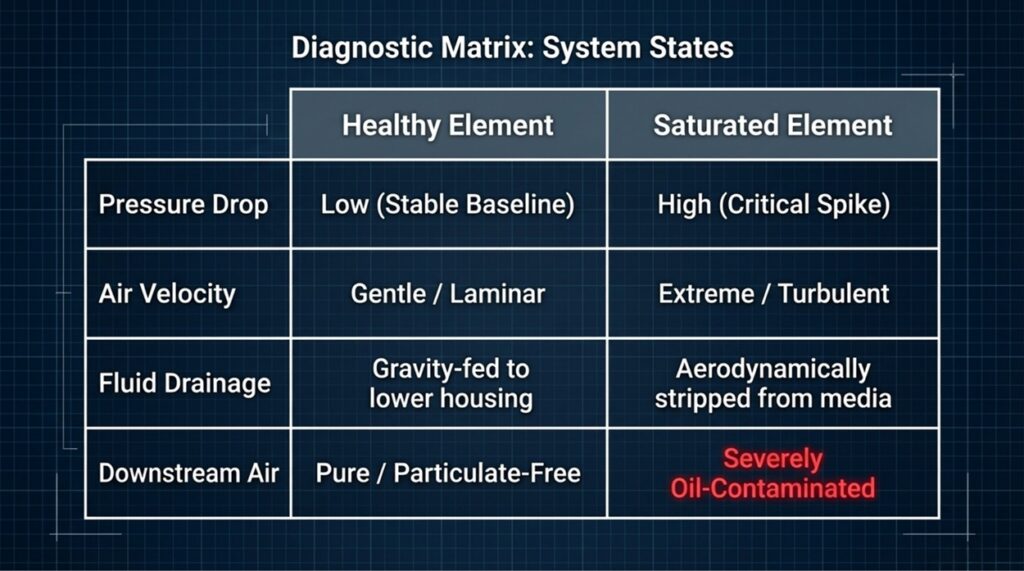
- Oil Aerosol Carryover: As differential pressure increases, the velocity of the air through the media rises. This can lead to “wicking,” where oil aerosols are pulled through the exhausted media and into your downstream processes. As a result, sensitive equipment is contaminated.
- Shortened Compressor Life: Operating at higher discharge pressures to compensate for downstream drops increases the internal temperature and wear on the compressor screw or piston. Consequently, this accelerates your major overhaul intervals.
Optimising Your Maintenance Interval
While many sites wait for a “timed” change-out (e.g., every 12 months), the most cost-effective strategy is Differential Pressure Monitoring.
By switching to hybrid wrapped and pleated elements with low-saturation-point borosilicate micro-glass media, National Filters can provide a lower initial “wet” pressure drop. As a result, this extends the effective life of the element while keeping the compressor in its most efficient operating window.
The National Filters Advantage
Don’t let “good enough” filtration drain your maintenance budget. Upgrading to precision-engineered elements designed for Australian industrial conditions ensures:
- Compliance with ISO 8573-1:2010 air quality standards.
- Reduced Oil Carryover for better downstream component protection.
- Maximised ROI through measurable energy reduction.
Stop paying for air you can’t use. If you haven’t audited your differential pressure across your main line filters this quarter, you are likely overpaying your energy provider.
Key Takeaways
- A 0.5 bar drop in a compressed air filter significantly impacts energy costs and overall efficiency.
- Every 2 psi pressure drop increases compressor energy costs by about 1%, highlighting the importance of maintaining filters.
- Neglected filters can lead to increased energy bills, reduced tool performance, oil carryover, and shortened compressor lifespan.
- Differential Pressure Monitoring is a cost-effective strategy to optimise maintenance intervals and extend filter life.
- Upgrading to precision-engineered filters ensures compliance with ISO standards and maximises ROI by reducing energy consumption.
Would you like a custom ROI spreadsheet to calculate the exact energy loss for your specific compressor model?
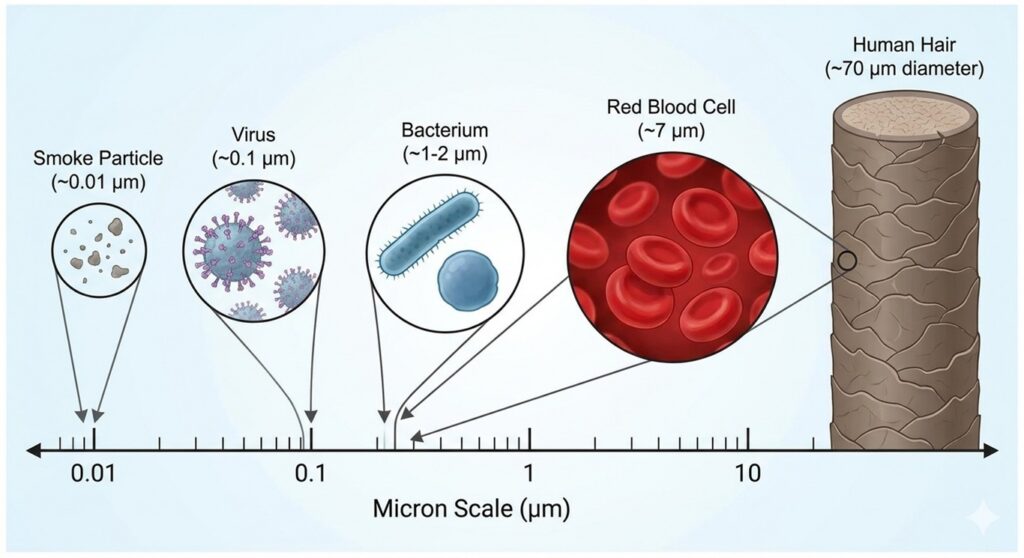
Coalescing vs. Particulate: Which Micron Rating Does Your System Actually Need?
In the world of compressed air, “clean air” is a relative term. To a technician,…

Critical Medical Breathing Air Filtration for Hospital and Dental Systems

Achieving ISO 8573-1 Class 0 Oil-Free Air with Inline Filtration
Achieving Compliance: Compressed Air Standards for Australian Food & Pharmaceutical Manufacturing
ISO 8573-1:2010: The Definitive Guide to Compressed Air Quality Classes